
Home › Air & Space
From the Magazine: Countering the threat of weaponised small drones
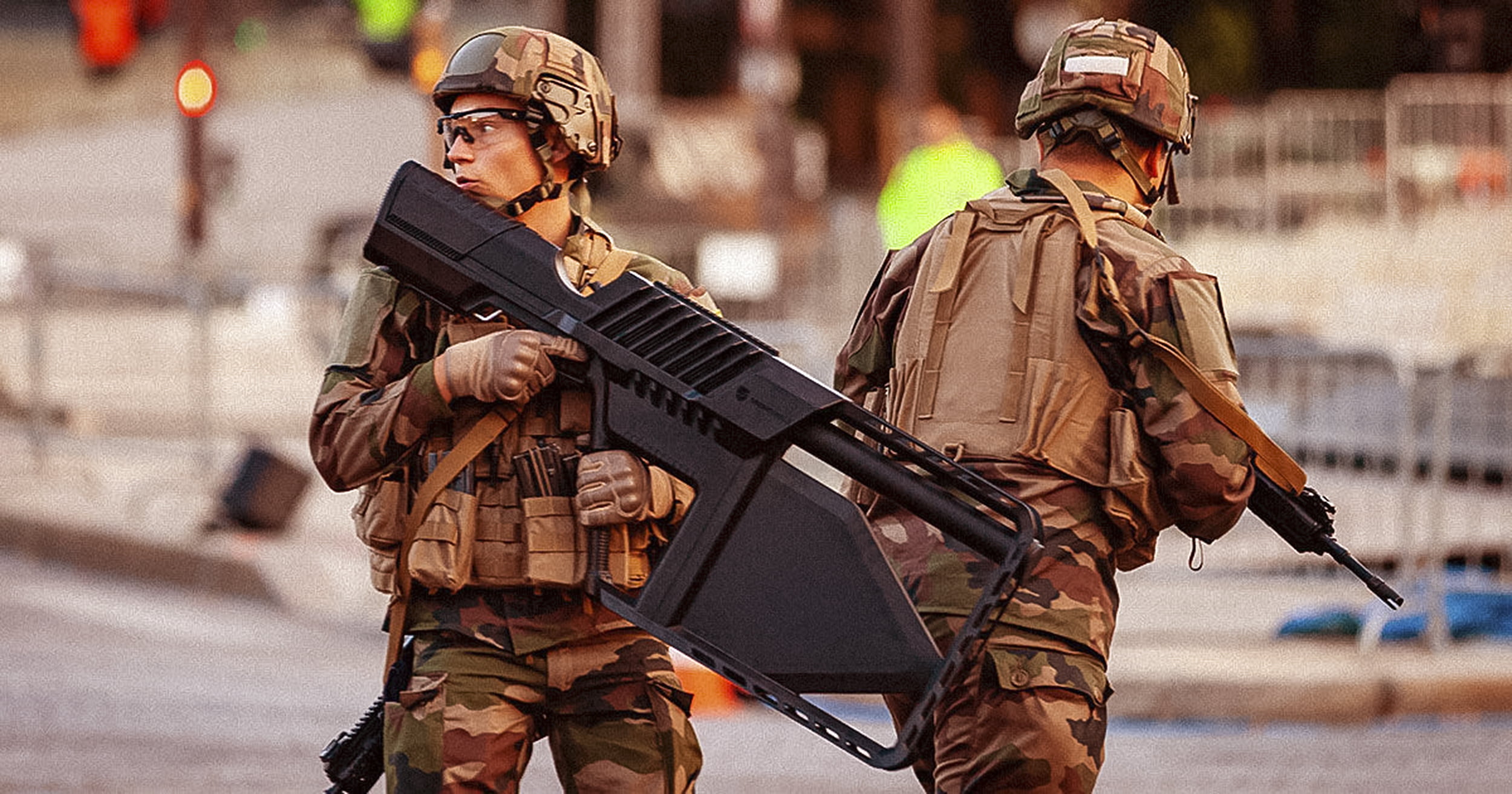
The lethality of small drones carrying explosives has been apparent for around a decade, first emerging as a serious threat in Iraq and Syria in the battles against ISIS in 2014. However, the scale of the threat has been taken to an entirely new level following Russia’s invasion of Ukraine in February 2022. Outnumbered and outgunned, Ukraine’s forces rushed systems into combat as fast as they could get their hands on them – and it quickly became apparent that large numbers of commercially produced First Person View (FPV) quadcopters and similar products had a lot of utility. They could be used for surveillance, providing vital intelligence, or equipped with explosives and flown kamikaze-style into Russian units. They proved particularly effective in top-down attacks on armoured vehicles, particularly if any hatches were left open, as was often the case. Other sea-based drones – basically remote controlled jet skis carrying explosives – were used with great effect on Russian surface combatants, so much so that the powerful Black Sea fleet has had to largely abandon its Crimean home port of Sevastopol. The ADF seems to have been strangely oblivious to the scale of this new threat – which is radically altering the face of combat – but fortunately Australian industry has already been developing solutions. A good case in point is Sydney-based DroneShield, which has become a global supplier of counter-drone technology, mainly to the United States. This is an excerpt from APDR. To read the full story, click here. For Editorial Inquiries Contact: Editor Kym Bergmann at [email protected] For Advertising Inquiries Contact: Group Sales Director Simon Hadfield at [email protected]
TAGSAPDRdrones
Previous article
Embraer sells four A-29 Super Tucano aircraft to new customer
Kym Bergmannhttps://asiapacificdefencereporter.com/
Kym Bergmann has more than 35 years of experience in journalism and Australian and international defence industry. After graduating with Honors from the Australian National University, he joined Capital 7 television, holding several positions including foreign news editor and chief political correspondent.
After 2 years on the staff of a Federal Minister, he moved to the defence sector and held senior positions in several companies, including Blohm+Voss, Thales, Celsius and Saab. In 1997 he was one of 2 Australians selected for the Thomson CSF 'Preparation for Senior Management' MBA course, the other being Chris Jenkins - formerly the CEO of Thales Australia.
He has also worked as a consultant for a number of companies, including Raytheon, Tenix (now part of BAES) and Martin Marrietta (now part of Lockheed Martin). He had several board appointments, including Thomson Sintra Pacific (1994 - 96) and Saab Pacific (1998 - 2003).
He retains good personal links with senior figures in Government, as well as in industry and the media. He decided to return to journalism in May 2008, and holds the position of editor for Asia Pacific Defence Reporter (APDR) and Defence Review Asia (DRA). He is also a podcaster and commentator on defence and national security issues.