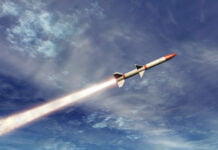

 Gilmour Space Technologies has completed the maiden test launch of Australia’s first locally designed and built orbital rocket, a major milestone toward offering low-cost, responsive launch services for small satellites globally. The 23-meter, 30-tonne Eris rocket, powered by new hybrid propulsion technology, successfully lifted off from the Bowen Orbital Spaceport in North Queensland, achieving approximately 14 seconds of flight.
“Space is hard,” said Adam Gilmour, CEO of Gilmour Space Technologies. “SpaceX, Rocket Lab and others needed multiple test flights to reach orbit. We’ve learned a tremendous amount that will go directly into improving our next vehicle, which is already in production. Getting off the pad and into flight is a huge step forward for any new rocket program. This was the first real test of our rocket systems, our propulsion technology, and our spaceport — and it proved that much of what we’ve built works.”
Importantly, there were no injuries to any person and no adverse environmental impacts.
“Only six nations currently launch to orbit regularly — and just a handful are developing sovereign capability to join them,” Gilmour said. “We’ve now taken a big step toward joining that group.”
The TestFlight 1 campaign was the first integrated attempt of an orbital-class rocket designed and built entirely in Australia. It also marked the first use of the newly licensed Bowen Orbital Spaceport — Australia’s first commercial orbital launch site, built by Gilmour Space to support future missions. Eris was developed almost entirely in-house — including propulsion, structures, avionics, software, and the spaceport itself — on a fraction of the budget available to most global launch companies. “Clearing the tower was a major milestone for our team. It showed that Australia can design, build, and launch rockets right here at home,” Gilmour said.
As part of this historic campaign, Gilmour Space worked closely with many stakeholders and regulators — including the Australian Space Agency, Civil Aviation Safety Authority, Air Services Australia, Maritime authorities, and others — to help shape and navigate the rules needed to safely launch rockets from Australia for the first time.
Initial data confirms that key systems performed well until the anomaly, including ignition, liftoff, first-stage thrust, range tracking and telemetry. The team is now reviewing flight data to understand the cause of the anomaly that led to early termination, with lessons already being applied to the next vehicle, which is in production.
The TestFlight 1 mission represents the culmination of years of effort by a team of more than 200 people, over 500 Australian suppliers, and strong support from government and industry. It is the next step in Gilmour’s mission to provide low-cost, responsive launch services for small satellites — a capability in growing demand globally.
The TestFlight1 campaign reflects years of effort from over 200 Gilmour Space staff, 500+ Australian suppliers, and close coordination with the Australian Space Agency, CASA, Airservices Australia, maritime authorities, and others.

For Editorial Inquiries Contact:
Editor Kym Bergmann at [email protected]
For Advertising Inquiries Contact:
Group Sales Director Simon Hadfield at [email protected]