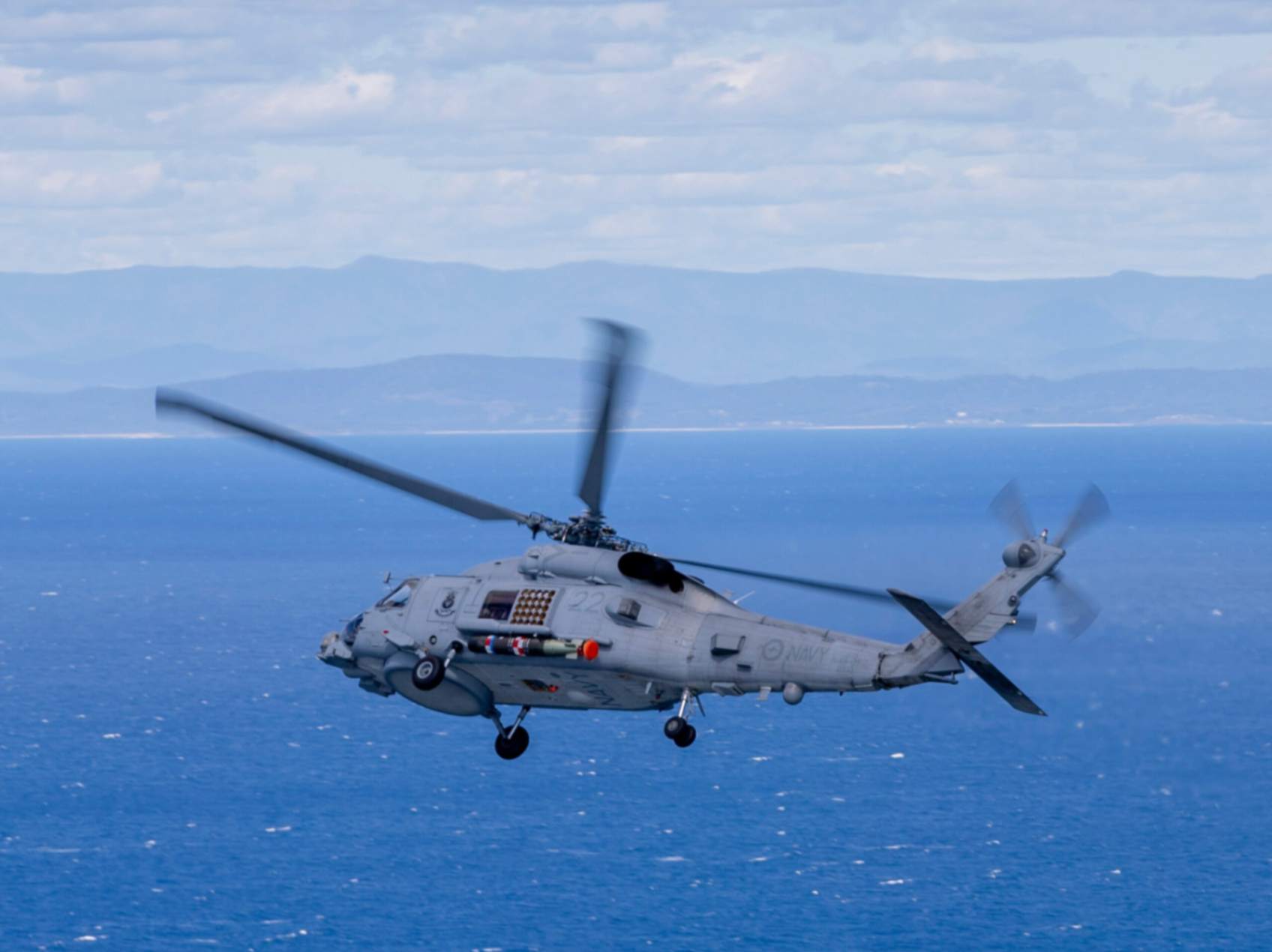
Seahawk helicopters and Airbus planes are set to replace aging New Zealand Defence Force aircraft in the first major investment decisions to be made as part of the Government’s Defence Capability Plan (DCP).

Defence Minister Judith Collins and Foreign Affairs Minister Winston Peters announced investment decisions of $2.7 billion, with the MH-60R Seahawk the preferred option to replace the existing maritime helicopters. The Airbus A321XLR (extra long range) aircraft will replace the aging 757 fleet.

“This decision will ensure New Zealand has a critical combat capable, interoperable and dependable fleet,” Collins says. “The MH-60R Seahawk is a great aircraft for what New Zealand needs and fulfils our objective of having a more integrated Anzac force, and the new planes will give us reliable aircraft to deploy personnel and respond to international events.”

Peters says these decisions show how the government is responding to the sharply deteriorating security environment. “Global tensions are increasing rapidly, and we must invest in our national security to ensure our economic prosperity. The DCP provides the foundation for our uplift in defence spending, and two-yearly reviews of the plan will allow us to adapt to an ever-changing security environment.”

The $2 billion plus investment in maritime helicopters and $700 million investment in the new Airbus A321XLRs are both part of the $12 billion in planned commitments outlined in the 2025 DCP announced in April.

Collins says the maritime helicopters are versatile and add combat and deterrent capability to the country’s naval fleet. “These five Seahawks will increase the offensive and defensive capability and surveillance range of New Zealand’s frigates and ensure we are interoperable with our ally Australia and other partner defence forces,” she says. “We will now move at pace to procure helicopters directly through the United States’ Foreign Military Sales programme instead of going to a wider tender, with Cabinet expected to consider the final business case next year. The two new Airbus A321XLR aircraft will be acquired on a six-year lease to buy arrangement, with capital costs of $620 million and four-year operating costs of $80.86 million. New Zealand needs reliable aircraft to deploy our personnel, deliver military equipment and humanitarian aid, support the evacuation of civilians, and transport government trade and diplomatic delegations quickly, over long distances, and often at short notice. The decision to acquire the extra long range aircraft reflects the importance of having an aircraft capable of such things as returning safely from Antarctica if it is unable to land due to conditions on the ice. Our Defence Force personnel have proven time and time again they do an outstanding job and we must ensure they have the tools that are up to the task.”

APDR_Bulletin_728X90


For Editorial Inquiries Contact:
Editor Kym Bergmann at kym.bergmann@venturamedia.net

For Advertising Inquiries Contact:
Group Sales Director Simon Hadfield at simon.hadfield@venturamedia.net

Previous articleDroneShield expands Ukrainian presence in counter-drone drive

Next articleSikorsky wins US Black Hawk modernisation deal

10 COMMENTS

  1. Seahawks are definitely a good start and can be flown off multiple platforms. Hopefully the Airbus aircraft won’t be prioritised for political junkets.

    I think that the next decision will probably need to be replacements for the ANZAC class and realistically in today’s climate they really need 4 ships to allow for operational flexibility. If they are able to join in on the Australian Mogami procurement potentially all 4 could be built in Japan on completion of the initial 3 (or more) ships for the RAN. This would give Japanese shipyards additional work and there would potentially be cost savings across a larger build. Given that the NZDF is experiencing similar manpower and recruitment issues to the ADF it would make sense to buy ships that require smaller crew levels

    NZ really need to procure fighters of some type of for no other reason Defence of the New Zealand homeland. Gripen may well be a good option for the RNZAF.

    The NZ Army also needs significant investment and some significant thought into the best force structure to meet there multiple challenges.

  2. I agree with your analysis Rod. The Mogami should be a no brainer decision based on the window of opportunity to jump on the RAN order.

    I’d also consider the latest F16V as an option to the Gripen.

  3. Australians ANZAC friends should consult the American Military about what military hardware you may need…they do get it right and they had the capacity to supply armies (if needed) in WW11 …as someone said be “ever vigil” always to protect your wealth 👍🥇

    • The US, as far as I can recall, never transferred any technology to us along with whatever we’ve purchased from them.
      The South Koreans and Japanese are offering technology transfers, reliable delivery timeframes and better pricing.
      The US is a dicey proposition as a supplier at the best of times.
      At the moment we should be giving them a wide berth.

  4. Geoffrey Snodgrass. Consultation with the U.S. will essentially entail buying what ever Aircraft from which ever U.S. supplier that needs to be propped up. This will eventually lead to the same problems that the ADF has. Extremely long lead times for initial delivery and extremely long lead times for spare parts and inevitable upgrades. The U.S. industrial base is struggling to meet the demands of its own Military, so who do you think will be shoved down the list if the U.S. decides their need is greater. The U.S. is not a reliable source of equipment and with so many Companies Capable Of supply and willing to transfer Technology it’s a wonder the ADF is such a poor example.

  5. Why would NZ select MH-60R over NFH when they already have an NH90 sustainment system in place, they are reportedly very satisfied with their NH90, and the two aircraft share almost all airframe and engine components?

  6. A very odd decision, The NZDF already uses NH90 and doesn’t seem to any problems at all operational wise. With a supply chain in place and familiarity with the Airframe, I would have assumed the NH90N would have been the Logical choice. The MH-60R is a good platform and will give the RNZN compatibility with the RAN but seems an odd choice considering the ease with which the NH90N would have being introduced and the fact that both their Anzacs will need replacing soon. Must be a reason but for the life of me I can’t see one, other than pressure from somewhere .

    • In 2011 the RAN selected MH-60R to replace Seahawk. They rejected a proposal for NFH90, even though it would have been supported as part of the MRH90 program, even while Navy crews were already operating MRH90 in 808 SQN RAN and training crews and maintainers in Australia. Then, in April 2022 the RAN stopped flying MRH90 and allocated A$2.5B for 12 additional MH-60R instead.

      So in three separate decisions over 14 years, both the RAN and the RNZN avoided NH90 variants, despite the existence of a national support and training base for NH90/MRH90 and the absence of those things for MH-60R.

      I don’t think external pressure was behind those decisions. I think in each case the primary concern for both navies was reliably generating the required tactical effects at the lowest cost and maintenance burden available.

      • Yes – in 2011, the NFH90 was still being trialled and had a complex, though high-performance, combat system. Under the original Australian schedule, a decision to replace the old Seahawks was scheduled to occur in 2016, by which time the NFH90 would have been far more mature. However, because of the cancellation of the Super Seasprites in 2008, the replacement program had to be brought forward, or at least that was the reason (excuse) given by the RAN. The RAN was pressing for MH-60Rs sole-source (of course), but Airbus Helicopters lobbied hard for a competition even though the outcome was pre-determined, as proved to be the case. On top of that, Airbus were forced to fight with one hand tied behind its back because while they were blocked from discussing their tender response, the USN was under no such restrictions and promoted the life out of the Romeos, with the support of Sikorsky.

        A number of us told Airbus that the chances of winning under these conditions were almost zero, but they pressed ahead in any case.

  7. Yes, MH-60R was/is an FMS acquisition, whereas NFH would have been a commercial sale. More pertinently, the MH-60R was mature, and in service in numbers, in contrast to the NFH.

    Different levels of engagement may have been available with the USN compared to Airbus, but I don’t think more contact with Airbus would have won the day. Army had been operating the aircraft for four years by 2011 and, as you say, the NFH weapons system was not mature. NFH would have been a punt, whereas MH-60R was a sure thing.

LEAVE A REPLY

Please enter your comment!
Please enter your name here