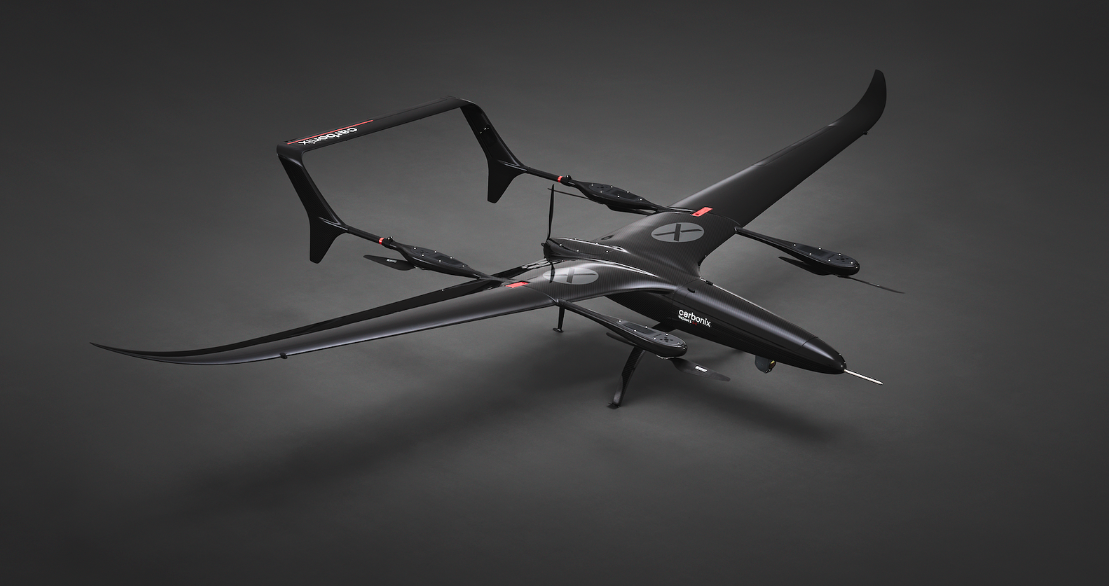
 Sydney-based Carbonix says it has become the first company in Australia to achieve Safety Assurance Integrity Level (SAIL) III certification for a drone. The certification, achieved in collaboration with the Civil Aviation Safety Authority (CASA), is also believed to be a world first for this class of aircraft and represents a significant breakthrough in how Beyond Visual Line of Sight (BVLOS) drone operations are assessed and approved.
Carbonix founder and CEO Dario Valenza said the milestone marked an important turning point for both Carbonix and the broader Australian drone sector. “Australia has developed some of the world’s most advanced drone technology and this milestone shows what can be achieved when industry and regulators work closely together. It creates an important pathway toward safe, scalable autonomous aviation operations in Australia.”
In practical terms, the certification moves long-range drones closer to being treated like trusted aviation systems rather than experimental technology requiring repeated case-by-case approvals. The SAIL III framework validates the maturity, reliability and engineering assurance of the drone system itself, making it a known quantity from a risk perspective. The framework forms part of an internationally recognised approach to autonomous aviation regulation designed to support increasingly sophisticated BVLOS operations.
As part of the certification process, Carbonix was required to demonstrate the reliability of:
- Aircraft structure and propulsion systems
- Avionics and communications architecture
- Manufacturing systems and supply chain
- Maintenance procedures and operational documentation
The certification creates a pathway toward scalable commercial drone operations across industries including mining, energy transmission, gas infrastructure, remote surveying and critical infrastructure monitoring. Following the certification, Carbonix received BVLOS operational approvals across the Surat Basin in southern Queensland – an area roughly the size of Belgium – for operations over gas gathering and pipeline networks for major energy customers. The approvals allow Carbonix to conduct large-scale long-range inspection and surveillance missions traditionally carried out by helicopters, light aircraft and ground crews.
With the approvals now in place, Carbonix can fully leverage the Ottano’s long-endurance and full-range capabilities across expansive and remote operational environments. This enables longer-duration missions, wider area coverage and more efficient asset inspections with reduced reliance on traditional crewed aviation and ground-based operations. By maximising aircraft utilisation across extended corridors and remote networks, the approvals significantly improve operational efficiency and drive down inspection cost per kilometre — unlocking a far more scalable and economically viable model for persistent aerial monitoring at scale.

For Editorial Inquiries Contact:
Editor Kym Bergmann at [email protected]
For Advertising Inquiries Contact:
Group Sales Director Simon Hadfield at [email protected]