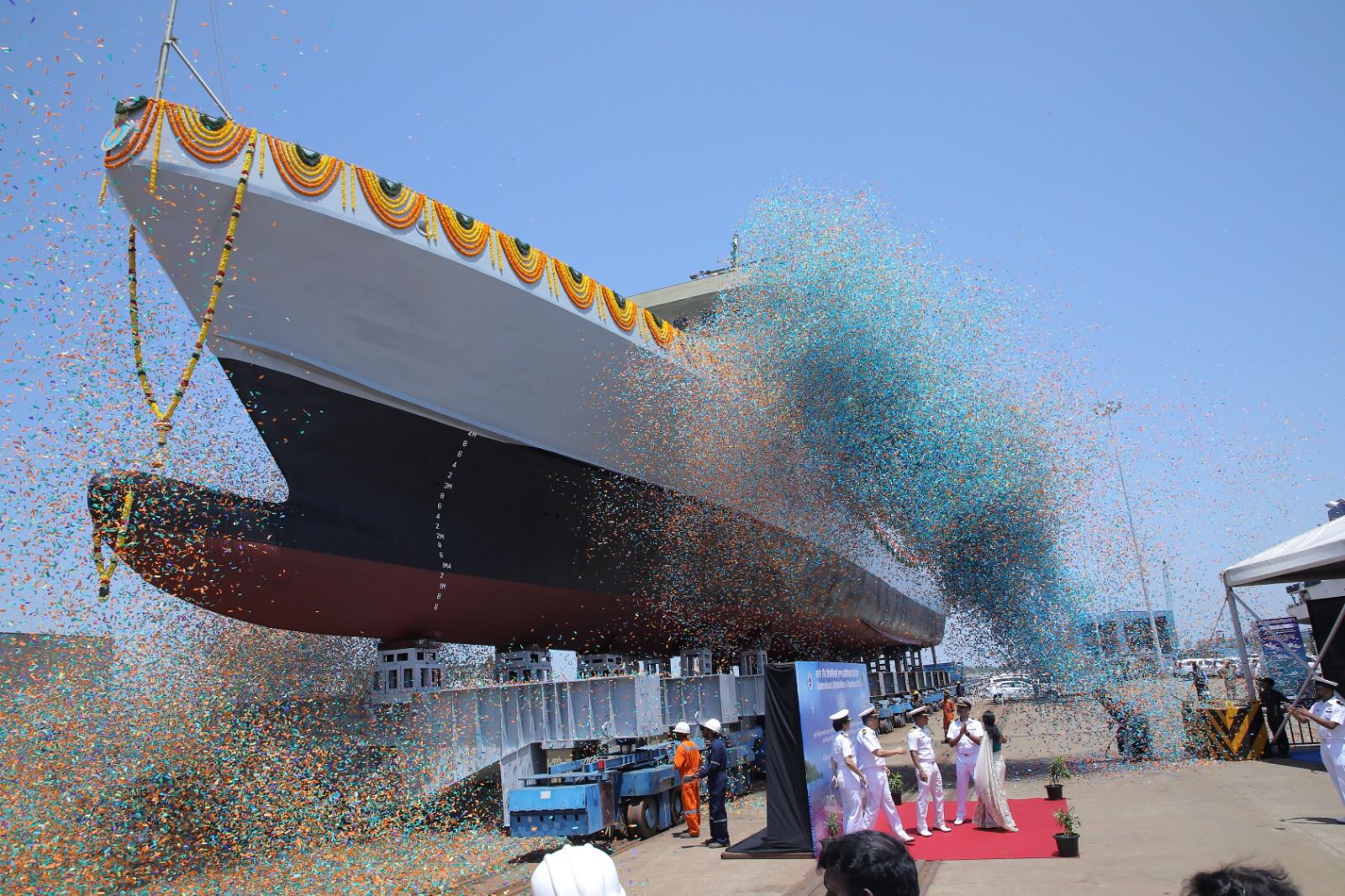
 INS Anjadip has recently been commissioned into the Indian Navy, marking a significant advancement in India’s coastal defence posture. Aimed at thwarting Chinese and Pakistani submarine intrusion, INS Anjadip and her sister vessels are poised to substantially enhance India’s anti-submarine warfare coverage in the littoral zones, closing capability gaps and improving responsiveness along its maritime boundary, says GlobalData, a intelligence and productivity platform.
GlobalData’s latest report “The Global Naval Vessels and Surface Combatants Market Forecast 2025–2035”, indicates that India is projected to allocate about $6.2 billion cumulatively to procure various vessels in the corvette segment over the 2025–35 period. The cost of each Arnala-class vessel is estimated at around $118.8 million. The report highlights how India is channeling funds to modernise its littoral defense capabilities by procuring naval platforms designed to intercept and neutralise surface and subsurface threats in shallow coastal environments.
INS Anjadip is part of an eight-vessel Arnala-class shallow-water anti-submarine warfare (ASW) craft project built by Garden Reach Shipbuilders & Engineers (GRSE) in collaboration with Larsen & Toubro.
Samiya Toufeeque, Aerospace and Defense Analyst at GlobalData, comments: “By inducting the second vessel of its class, India continues to demonstrate growing technological innovation and strategic self-reliance in the shipbuilding sector. The vessels’ high rate of indigenisation strengthens the defence supply chain, mitigating exposure to external disruptions and geopolitical risks. Coupled with government policies aimed at equipping these vessels with indigenous subsystems, these procurements are expected to drive growth across several associated industrial sectors in the country.”
India’s decision to integrate systems such as the DRDO-developed Abhay sonar, variable-depth sonar, an integrated combat management system, a domestically manufactured 30 mm naval gun, and water-jet propulsion illustrates the synergy between innovation and strategic necessity. These platforms also address critical ASW capability gaps left by decommissioned units, especially the Abhay-class vessels, thereby retaining the capabilities to defend against submarine and unmanned underwater threats across the Indo-Pacific.
Toufeeque concludes: “As the ongoing conflict in the Middle East escalates, the risk of regional spillover is increasing, and India is likely to take necessary measures to safeguard its territorial borders along the Arabian Sea. This could lead to the deployment of ASW platforms such as INS Anjadip to deter any hostile submarine activities closer to the country’s shores.”

For Editorial Inquiries Contact:
Editor Kym Bergmann at [email protected]
For Advertising Inquiries Contact:
Group Sales Director Simon Hadfield at [email protected]